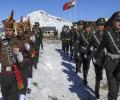
Sources said the process of disengagement along the Line of Actual Control is "complex", and in such a context, speculative and unsubstantiated reports need to be avoided.
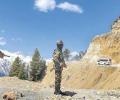
This is the third round of Corps Commander-level talks being held. The first two rounds had taken place in Moldo on the Chinese side of the LAC.
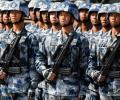
"The Chinese military has done military build-up not only just in Ladakh but also in other sectors including Himachal Pradesh, Uttarakhand, Sikkim and Arunachal Pradesh wherever it shares borders with us. The build-up includes troops and heavy weaponry which are deployed in rear positions," government sources told ANI.

The incident had taken place at a time when the Indian Foreign Minister, S Jaishankar, was in Moscow for the Shanghai Cooperation Organisation meeting, where he met his Chinese counterpart to address the border issues.

Amit Shah's visit on June 26, 2019, was already touted to be a precursor for a dramatic announcement and "I got a call at 2 am in the morning, informing me of a meeting with the home minister at 7 am", Dhillon said in his book.

The defence minister made the remarks after performing 'Shastra Puja' -- the customary worship of weapons -- at the Sukna-based headquarters of the Indian Army's 33 Corps in Darjeeling district of West Bengal on the occasion of Dussehra.
Yes, we (Quad) had a discussion on India-China relations because it was part of how we briefed each other about what was happening in our neighbourhood, Jaishankar said.
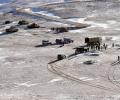
India and China to hold the 11th round of corps commander-level talks at Chushul in eastern Ladakh at 10.30 am on Friday that is expected to focus on disengagement of troops in remaining friction points, sources within the Indian Army said.
In all likelihood, the next conventional Chinese attack on India would be preceded by a massive cyber attack designed to cripple Indian networks and interfere with our disaster-relief programmes.

After having successfully disengaged with China in the Pangong lake area, Armies of India and China are likely to hold talks again this week to discuss further disengagement from Gogra heights and Depsang plains, said sources.
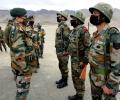
As per the sources, the discussions between the two sides include pulling back tanks and armoured vehicles from their present positions, and some development in this regard is likely to take place in the next few days.

The talks took place in a beach resort in Benaulim on the sidelines of a meeting of the Council of Foreign Ministers of the Shanghai Cooperation Organisation.
Another round of diplomatic talks under the framework of the Working Mechanism for Consultation and Coordination is expected to be scheduled soon.

'India and China are already in a warlike situation.'

The answer to Chinese tactics of nibbling territory is not defence of every inch -- a military impossibility -- but instead, nibbling at Chinese territory wherever we are in a stronger position, counsels Colonel Anil A Athale (retd).

'However, a lot of preparatory work would have to go in and China must be prepared to announce an end to the standoff by disengaging from the remaining areas along the LAC.'
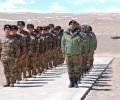
The last contact between India and China was the military talks at the Corps Commander level in October this year.

China will use airpower to support Pakistan from the start of a war. China will use the opportunity to at least take Ladakh. Its growing navy will prevent India from blockading or attacking the Makran Coast. And thanks to Chinese weapons, Pakistan keeps expanding its forces, observes Ravi Rikhye.
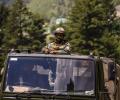
The Indian Army's Northern Command would be stretched if all three of the corps under it -- based in Leh, Srinagar, and Nagrota (near Jammu) -- were to face hostilities, notes David Devadas.

Jaishankar, who arrived in Santo Domingo on his first official visit to the Dominican Republic, also said that India has seen a dramatic expansion in connectivity, contacts, and cooperation across the region.
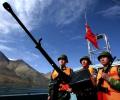
The step was taken by both the sides as they wanted to avoid a repeat of June 15 violent face-off as the troops were in close vicinity.
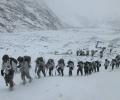
The Indian side has an edge over their Chinese counterparts in terms of battling the weather as a large number of them have already done duty in the Ladakh sector, including the Siachen glacier or other high altitude positions, sources said.
"On the border issue, China always maintains that we should follow through on treaties and agreements we signed and we jointly uphold peace and tranquility at the border region," Foreign Ministry spokesman Wang Wenbin said while responding to Jaishankar's remarks.
The Indian side also told the Chinese delegation that the talks on disengagement should include Depsang as well as all face-off sites, insisting that it should be a simultaneous process and not a selective one.
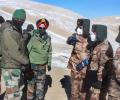
The Indian side forcefully pressed for early resolution of the standoff and particularly insisted on expeditious disengagement in Hot Springs and Gogra, a source said.
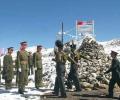
At the talks, the Indian side insisted on complete disengagement of Chinese troops at the earliest and immediate restoration of status quo ante in all areas of eastern Ladakh prior to May 5 when the standoff began following a clash between the two armies in Pangong Tso, they said.
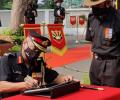
Lieutenant General Manoj Pande on Tuesday took over the reins of Eastern Command as its General Officer Commanding-in-Chief.

It is learnt that the face-off took place after a Chinese patrol tried to enter Indian territory and the troops of China's People's Liberation Army were forced back.

'When armies start attacking with clubs and batons, then at some point this can take an escalatory spiral and spin out of control.'
'By not even acknowledging China's occupation of Indian territory Modi signalled to Beijing that he was not prepared to used forceful means to vacate the Chinese occupation, and that his government was reconciled to this loss of territory and accepted the fait accompli engineered by the PLA.'
'When the adversary has tasted what you can do, he is going to be more experienced in countering how the Indians think.' 'He will go back, rework and come back.'

The Army has also further bolstered overall surveillance mechanisms in all areas along the Line of Actual Control (LAC) in eastern Ladakh after foiling China's fresh attempt to occupy an area on the southern bank of Pangong lake, they said.
The CSG is one of the topmost bodies in the government which provides directions to the military and diplomats on the stand to be taken during talks with the Chinese and also take a stand on the points and demands raised by the Chinese side.
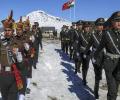
The disengagement plan was discussed between the two sides during the 8th Corps Commander-level talks which were held on November 6 in Chushul.
The seventh round of military talks between India and China held on Monday was "positive and constructive", and both sides agreed to earnestly implement the understanding reached by their leaders to not turn differences into disputes, a joint statement by the two armies said on Tuesday.
'The Indian Army is fully prepared for a long and permanent deployment if the PLA does not retreat.'
The meeting primarily focused on implementation of certain decisions taken at the fifth round of talks between Corps Commanders of the two armies last week on the disengagement process as well as to bring down prevailing tension in the region, sources said.
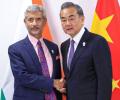
China on Friday concurred with External Affairs Minister S Jaishankar's observation that an Asian Century cannot happen if India and China don't join hands and emphasised that the two neighbouring countries have 'far more common interests than differences'.
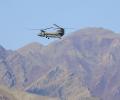
As soon as one lands at the Leh airfield, one can see the Indian Air Force C-17s, Ilyushin-76s, and C-130J Super Hercules aircraft flying in with rations and supplies for the troops deployed on the forward locations opposite the Chinese forces.

In a statement, the Indian Army said the face-off was resolved by local commanders as per established protocols. The incident at Naku La became public on Monday hours after senior commanders of both the armies concluded a nearly 16-hour-long meeting in an attempt to defuse tension in eastern Ladakh.
